
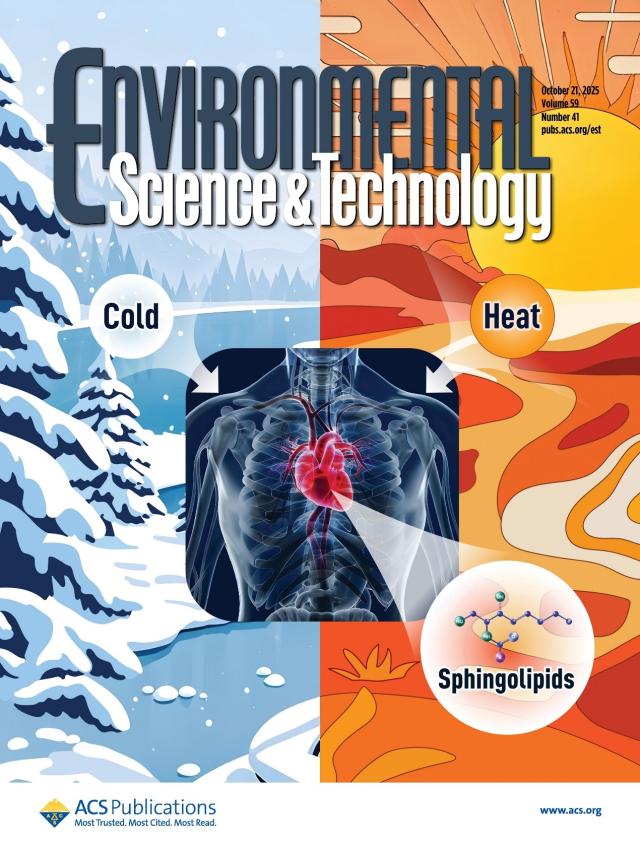
Nonoptimal temperature exposure is associated with an increased risk for cardiovascular diseases (CVD), but the underlying mechanisms remain poorly understood. Sphingolipids, a class of bioactive lipids, play a significant role in the pathophysiology of CVD. This study investigated associations between temperature and markers of sphingolipid metabolism and explored their biological implications in a panel study of 251 participants in Beijing, China. Personal-level environmental temperature was continuously monitored, and transcriptomic and lipidomic analyses were performed to characterize sphingolipid metabolism. Generalized additive mixed models revealed a near “V-shaped” relationship between daily average temperature and most sphingolipids, including ceramides C18:0/C20:0/C24:1, sphingomyelins C18:0/C24:1, hexosylceramides C16:0/C18:0/C20:0/C22:0/C24:0/C24:1, lactosylceramides C16:0/C18:0/C24:0/C24:1, and sphingosine-1-phosphate. Other sphingolipids, such as ceramides C16:0/C22:0/C24:0 and sphingomyelins C16:0/C20:0/C22:0/C24:0, showed a negative linear relationship with temperature. Each 1 °C decrease (cold exposure) or increase (heat exposure) in temperature was associated with up to a 1.4% and 0.9% increase in sphingolipids, respectively. Both exposures were significantly associated with the upregulation of genes encoding enzymes of sphingolipid metabolism. Moreover, Spearman’s correlation analysis found that various sphingolipids correlated significantly with established markers of CVD. Our findings suggest that nonoptimal temperature has a significant impact on human sphingolipid metabolism, and sphingolipids may serve as markers indicating nonoptimal temperature-induced cardiovascular risks.
https://doi.org/10.1021/acs.est.5c07999
