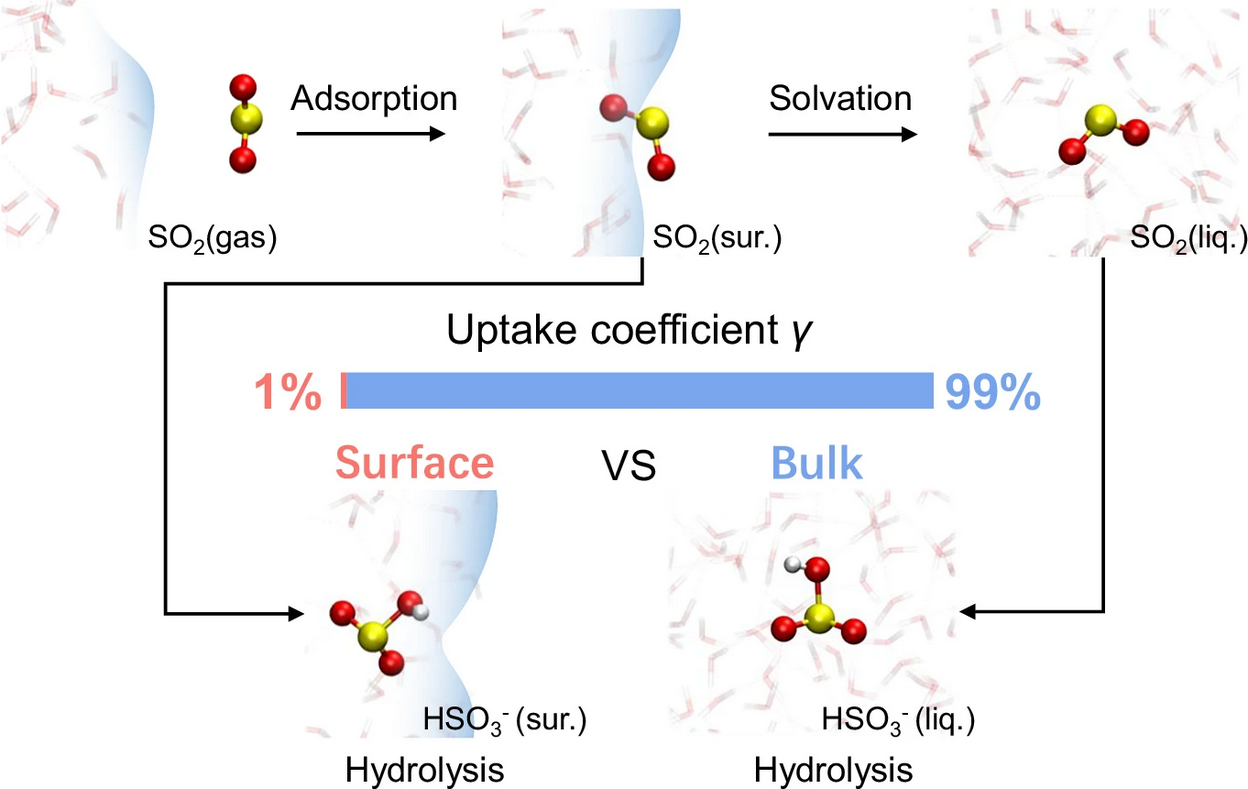
Sulfur dioxide (SO2) hydrolysis is a critical step in secondary sulfate formation, which significantly affects air quality and climate change. Since the 1980s, debate has persisted over whether this reaction occurs mainly at the air–water interface or in the bulk phase. In this study, we investigate SO2 hydrolysis in heterogeneous systems using molecular dynamics simulations that are driven by a deep neural network potential with ab initio accuracy. In previous studies, rapid interfacial reactions have been proposed to account for the unexpectedly high SO2 uptake coefficients. In contrast, our results reproduce the observed uptake coefficients but show that interfacial hydrolysis contributes only 1%. We find that hydrolysis is accelerated in the bulk phase, where the denser hydrogen-bond network enhances SO2 electrophilicity and lowers the reaction barrier. The theoretical simulations in this work help to improve the understanding of aqueous sulfate aerosol formation and microdroplet chemistry.